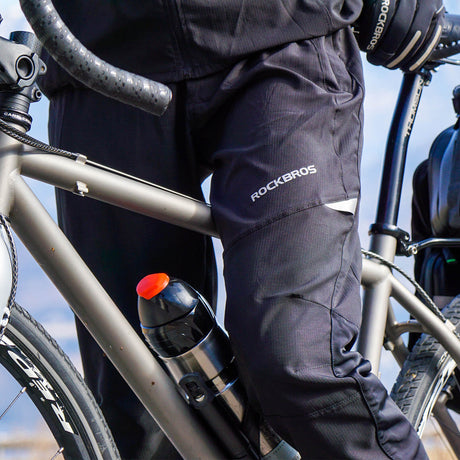
A flat tire can ruin even the best-planned cycling trip. Whether you're in the middle of the city, on a country road, or deep in the woods, a sudden flat tire is a scenario every cyclist experiences sooner or later. The key to getting out of trouble? Calmness, basic skills, and a few simple tools at hand.

Why does a tire lose air?
Before we get into practice, it's worth knowing what most often causes air loss:
Puncture – the most common cause, often caused by glass, a nail or a sharp stone
Snake bite – may occur after hitting a curb or pothole with too low pressure
Damaged valve – a leaky valve can lead to a slow loss of air
Tires or inner tubes that are too old – over time, the material ages and becomes susceptible to damage

What should you always have with you?
| Tool name | Description of use | Comments |
|---|---|---|
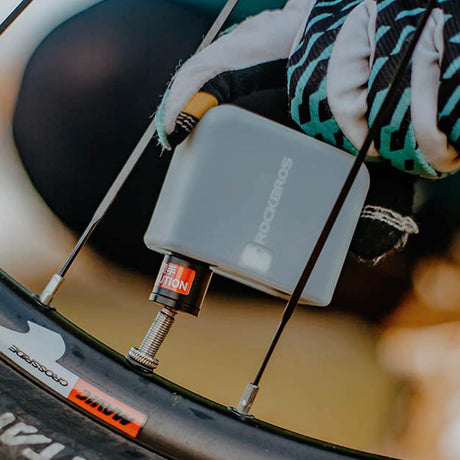
| Portable CO₂ pump/cartridge | Quick inflation in case of a sudden puncture | The CO₂ cartridge is lightweight and efficient |
| Inner tube repair kit | Includes tire levers, sandpaper, glue, and patches | To repair a punctured inner tube |
| Spare inner tube | Quick replacement in case of more serious damage | Sometimes replacement is faster than repair |
| Tire levers/hooks | They make it easier to remove the tire | Helpful when replacing or repairing an inner tube |
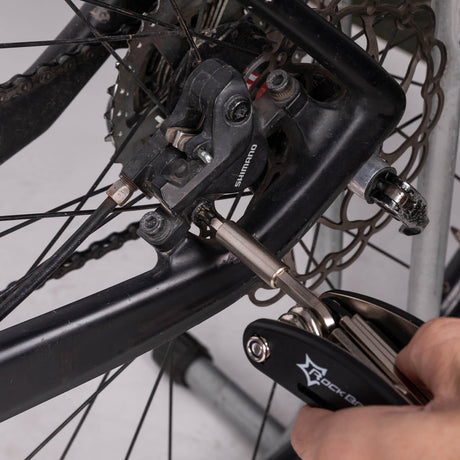
| Multifunctional folding tool | Adjustment of rims, brakes, etc. | Compact, multi-purpose |
| Disposable gloves | They protect your hands from getting dirty | Hygienic and comfortable |
| Pressure gauge | Accurate tire pressure measurement | Recommended for longer journeys |
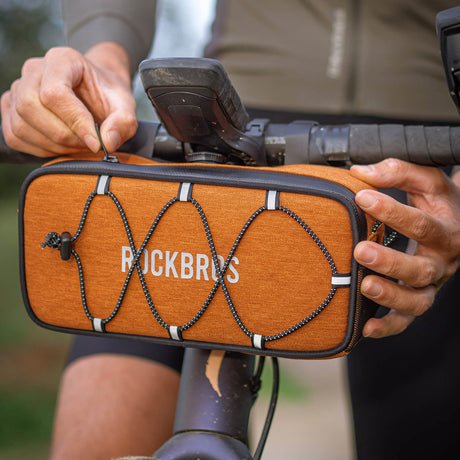
| Small saddle/frame bag | A place to store tools | It doesn't interfere with driving, it's very practical |


Emergency situation: what to do step by step?
1. Stop in a safe place
Avoid repairing on a busy road or on an exit ramp. Look for the shoulder, shade, and a relatively flat spot.
2. Remove the wheel
If you have disc brakes, simply release the quick-release or unscrew the bolt. If you have V-brakes, loosen the calipers to gain some clearance.
3. Remove the tire
Use tire levers to pry the tire from one side of the rim. Do this gently to avoid damaging the tube or rim.

4. Pull out the inner tube
If you have a Presta valve, unscrew the cap. For a Schrader valve, simply push it out. Carefully examine the inner tube to locate any damage (submerging it in water helps to spot air bubbles).
5. Find and eliminate the cause
Feel the inside of the tire – very carefully – for glass, spikes, or sharp stones. Don't leave the source of the puncture.
6. Repair or replace the inner tube
If you have a spare, swap it out and you're done. If you have patches, degrease the damaged area, apply the patch, and wait a moment.

7. Put the tire on and inflate it
Make sure the inner tube isn't pinched when you insert it. Inflate to the correct pressure – typically 4–6 bar for city bikes, 2–3 bar for mountain bikes.
What if you don't have a repair kit?
A valveless inner tube? You might try pumping air through it every few minutes to get to the nearest bike shop.
Don't have a pump? Find a gas station—more and more have compressors with adapters for bicycles.
Do you have tubeless tires and a sealant? Sometimes, just pumping them up is enough, and the sealant will seal a small puncture on its own.
How to prevent breakdowns on the road?
Check the condition of your tires regularly – visible cracks, a smooth surface or a loose tread are signs that it's time to replace them.
Correct tire pressure is key. Too low can cause snakebites, while too high can rupture the inner tube.
Avoid driving on glass, sharp stones and curbs
Consider tires with puncture protection or sealant (even for inner tubes)

Tubeless – is it worth it?
More and more cyclists (especially MTB riders) are choosing tubeless systems. What are the benefits?
Reduced risk of puncture (sealant works continuously)
Lower pressure = better grip
Lighter set
The disadvantage may be slightly more difficult installation and the need for special tires and rims.
Bonus: How to change a tire in 5 minutes?
Over time you will achieve perfection – here is a quick sequence:
1.Stop, remove the wheel
2.Open the tire on one side
3.Pull out the old inner tube
4.Insert the new one, make sure the valve is seated properly
5. Put the tire on, pump it up – done

Summary: a breakdown is not the end of the world
A flat tire can surprise anyone, but a well-prepared cyclist won't be fazed. Remember: a good tire repair kit, a little patience, and a few tricks will be enough to get you back on the road quickly. Whether you ride recreationally or daily to work, this knowledge will definitely come in handy. Safe travels!